What Is Forestry Mulching and Is It the Right Land Clearing Choice for Your Evansville Property in 2026?
Evansville, IN, property owners have more Land Clearing options than ever, and forestry mulching has become one of the most searched methods in Southwest Indiana. Whether you are reclaiming an overgrown lot near the riverfront, prepping rural acreage in Warrick or Vanderburgh County, or managing a wooded residential parcel, understanding your options is the first step toward a smart, cost-effective decision.
What Is Forestry Mulching?
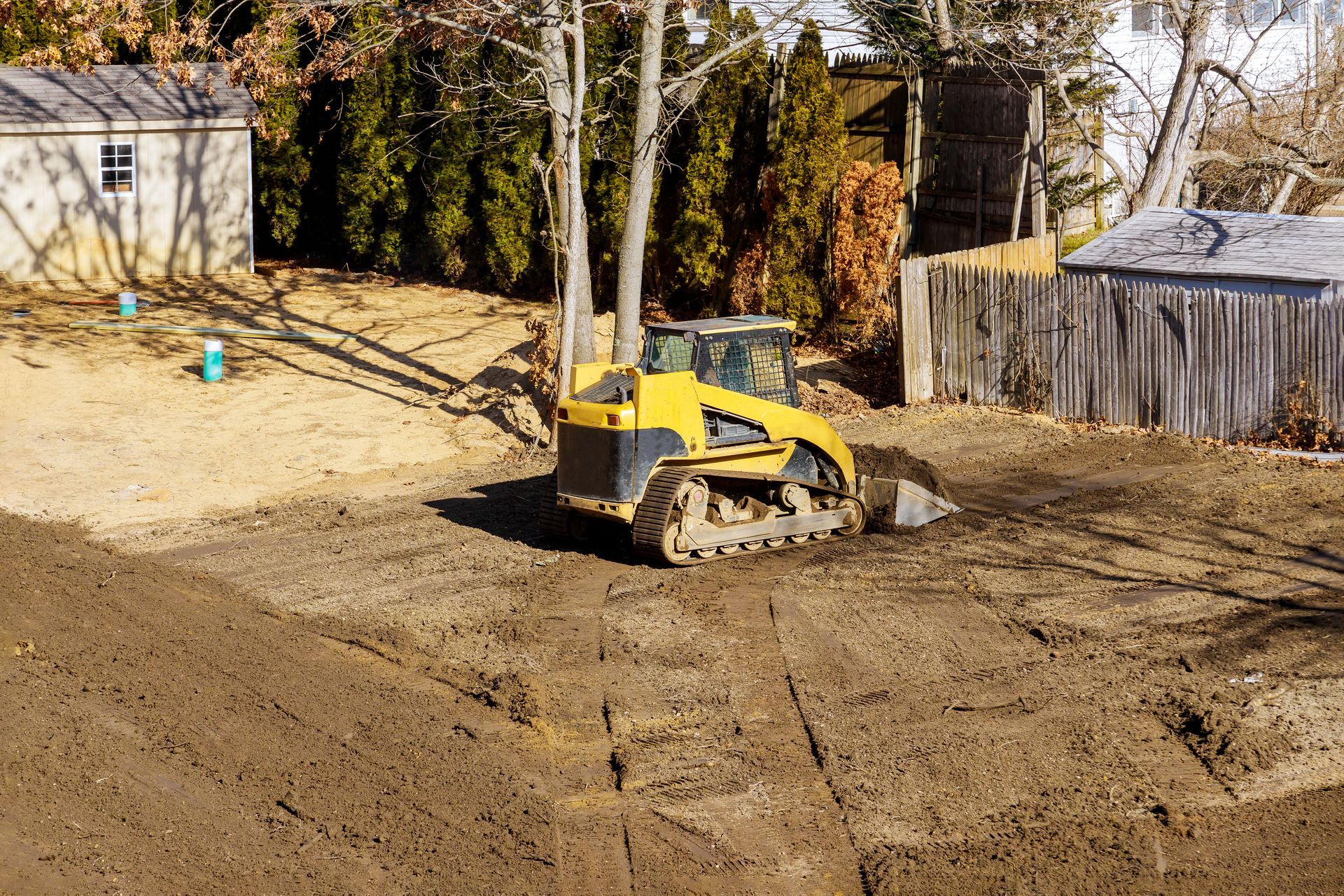
Forestry mulching is a single-pass land management method that grinds standing trees, brush, stumps, and vegetation directly into mulch on the spot. A skid steer or track loader fitted with a high-speed drum mulching head moves across the land and processes everything in one operation. There is no piling, no burning, and no hauling debris off-site.
The result is a layer of shredded organic material spread evenly across the cleared area, protecting soil until new grass or plants take hold. Many property owners describe a finished forestry mulching site as having a clean, park-like appearance.
How Does It Differ from Traditional Land Clearing?
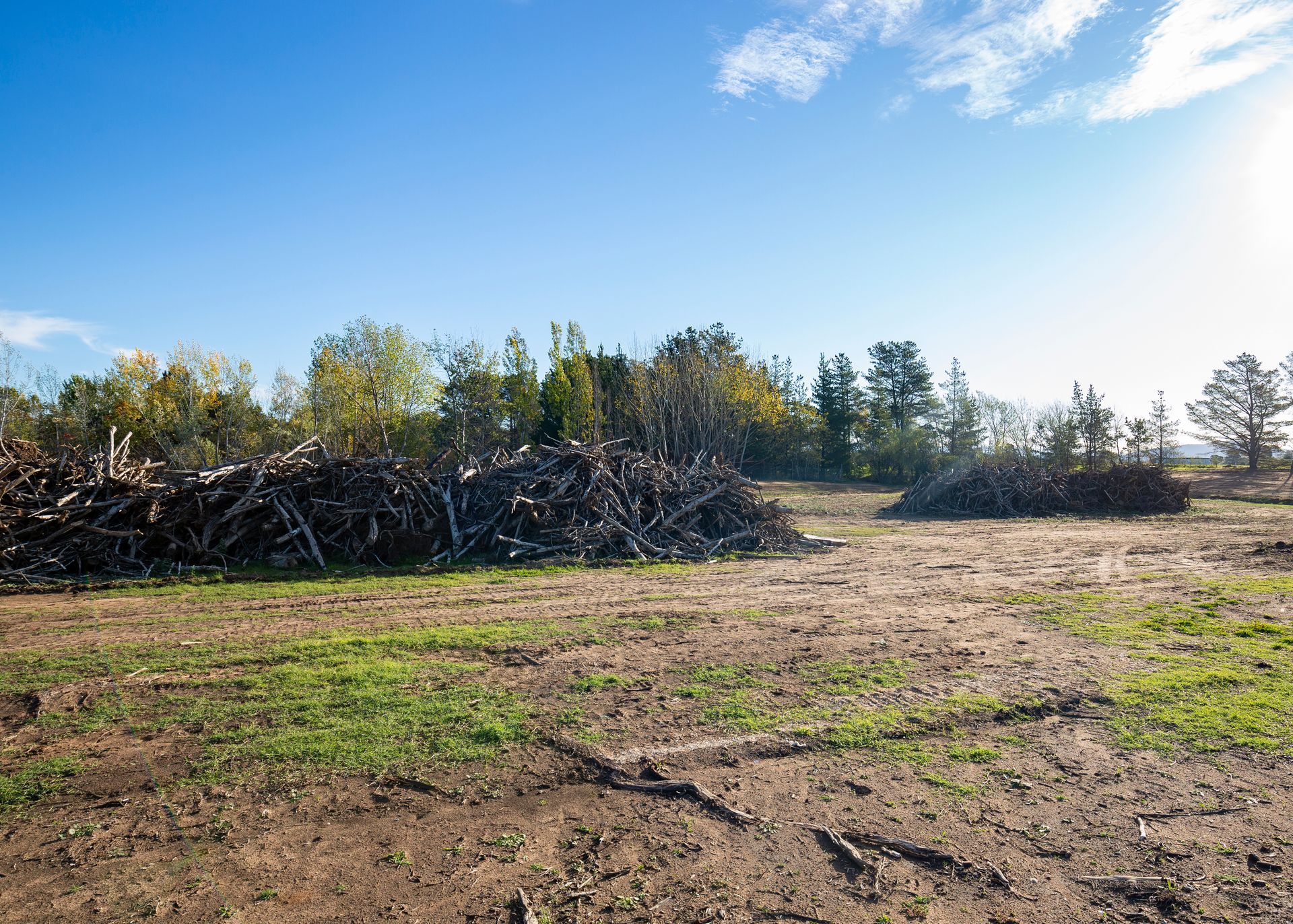
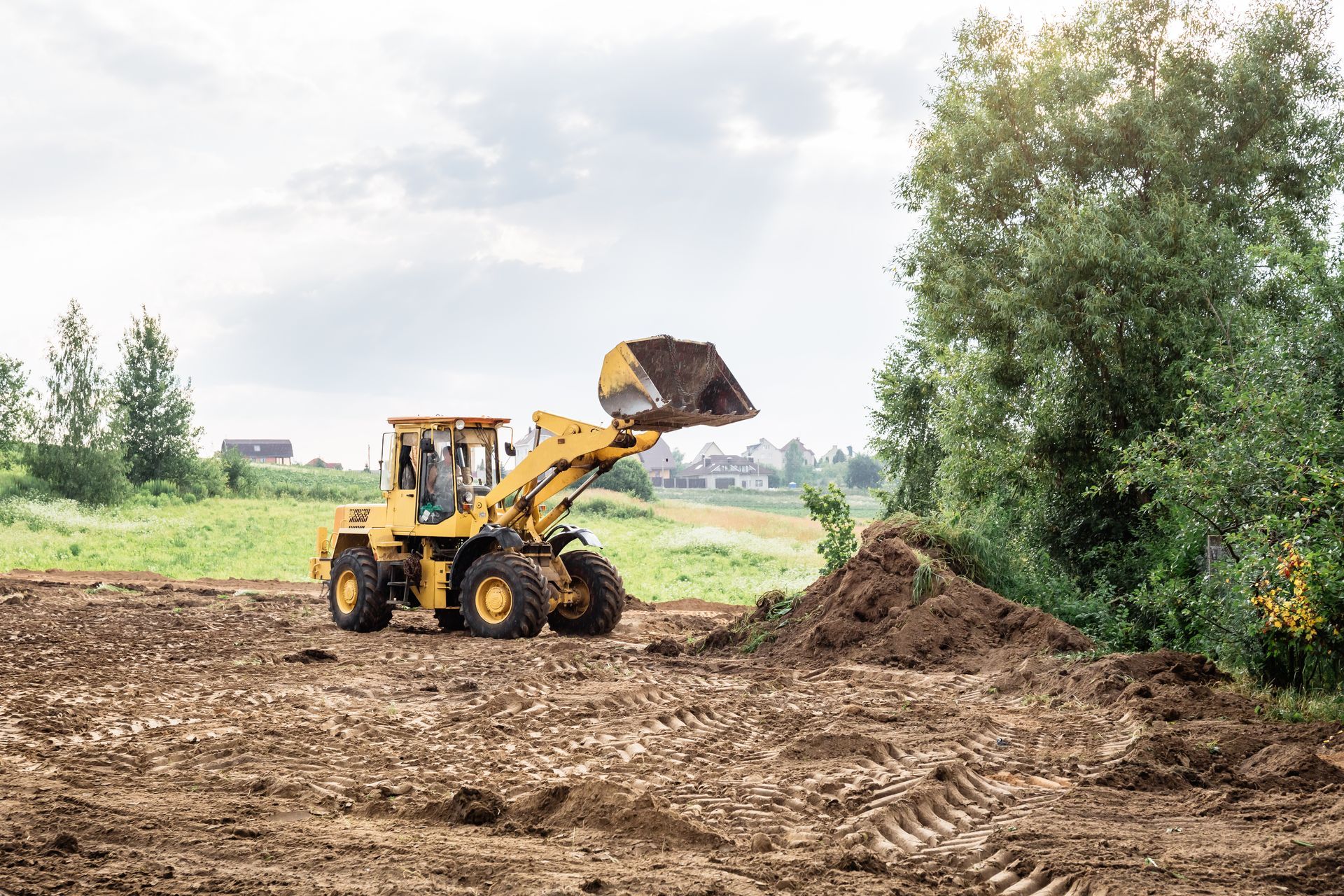
Traditional land clearing is a multi-machine process. Bulldozers push down trees, excavators pull stumps, and debris is piled, burned, or trucked away, leaving bare exposed dirt that may need additional grading before a site is usable.
Forestry mulching works differently in three key ways. Soil disturbance is minimal because equipment works above ground, leaving root systems largely intact. No debris removal is needed, which reduces labor and fuel costs. And the mulch layer retains moisture and reduces erosion immediately after the job is done.
Traditional clearing remains the right choice when a project requires full stump removal, a graded building pad, or a clean foundation surface.
Pros and Cons for Evansville, IN, Properties
Vanderburgh County sits in the Ohio River basin, where clay-heavy soils are common and spring rainfall can accelerate runoff on freshly cleared sites.
Where forestry mulching can help: the mulch layer absorbs rainfall and slows runoff on properties near drainage ditches, wooded slopes in Newburgh, or lots close to Pigeon Creek. Organic material decomposes over time and feeds soil microbes, improving clay-heavy ground. Rural parcels in Posey or Gibson County may clear faster with one machine than a full traditional crew. Forestry mulching also typically does not require a burn permit, simplifying scheduling in suburban and semi-rural zones.
Where it may not be the right fit: if your property needs a concrete slab, foundation footings, or a graded building pad, traditional clearing is likely required. Large trees over roughly 10 to 12 inches in diameter can challenge standard mulching equipment, and rocky or uneven terrain may favor conventional excavation.
When Should Evansville Homeowners Choose Forestry Mulching?
Forestry mulching is often the better fit when vegetation needs to be controlled rather than fully stripped. It works well for overgrown residential lots where the goal is accessibility rather than a construction-ready grade, rural properties in areas like Princeton or Mount Vernon where invasive species such as bush honeysuckle have overtaken pasture edges, properties near water features or low-lying areas where soil exposure increases erosion risk, and fence line maintenance or trail creation through wooded parcels.
If you are preparing land for a new home build, driveway installation, or any project requiring grading and compaction, a Land Clearing approach that includes excavation may be a better starting point.
Frequently Asked Questions About Forestry Mulching
Does Forestry Mulching Remove Tree Stumps?
Forestry mulching grinds stumps flush with or just below ground level, but it typically does not remove the root ball entirely. If your project requires full stump extraction for construction or deep grading, traditional stump grinding or excavation may also be necessary.
Is Forestry Mulching Better for Indiana's Clay Soil?
It can be. Clay-heavy soils in Evansville and Vanderburgh County are prone to compaction and erosion when topsoil is stripped bare. The organic mulch layer helps protect topsoil, retain moisture, and gradually improve soil structure as it decomposes. For properties not headed straight into construction, this is a meaningful advantage.
Do I Need a Permit for Forestry Mulching in Evansville?
Permit requirements depend on your property type, size, and proximity to regulated waterways or wetlands. Forestry mulching generally avoids burn permit requirements that sometimes apply to traditional debris clearing. Properties near the Ohio River corridor or flood-prone zones in Vanderburgh County may have additional considerations. Confirm local requirements with the City of Evansville or Vanderburgh County before any land work begins.
Can Forestry Mulching Be Combined with Other Land Clearing Services?
Yes. Many Land Clearing projects in the Evansville, IN, area benefit from a combined approach. Forestry mulching can handle overgrown brush and lighter vegetation while traditional excavation addresses areas that need a compacted base or full stump removal. A site assessment can help determine the right mix for your property.
Get a Free Estimate from a Local Team
Paulson Earthworks serves Evansville and the surrounding Southwest Indiana and Western Kentucky region with professional land clearing, site preparation, grading, and excavation services. Call 812-453-7634 or request a free estimate online to get started. You can also learn more about the full range of land clearing and brush removal services available for residential, agricultural, and commercial properties throughout the region.